
False Weakling, True Power - How to Watch for Free
A god-tier spell exposes the empire's most mocked man
Advertisements
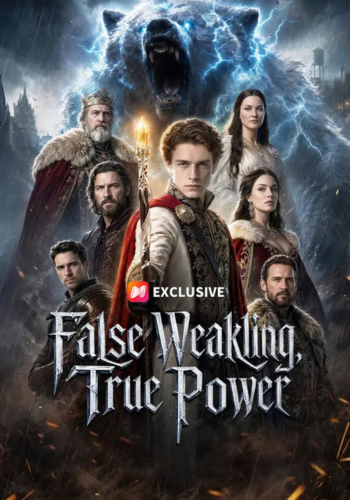
Princess Isolde wants a husband. Lucien hides what he really is
Series Information
- Title: False Weakling, True Power
- Year: 2026
- Platform: NetShort
- Genre: Urban Fantasy, Hidden Identity, Multiple Identities, Karma Payback, Revenge, Another World, Warlord Fantasy, Male-Lead Drama, Magic System, Court Intrigue
- Format: NetShort vertical short drama produced across fifty episodes, set in the fantasy court of the Aurellian Empire with extensive magic-system world-building and structured around a hidden-power male protagonist arc.
Synopsis
In the Aurellian Empire, a martial tournament has been declared to find Princess Isolde a husband, and the streets of the capital fill with mages from rival kingdoms who arrive carrying their own ambitions. The Northern Kingdoms send the loudest contenders. Some have come to win the princess. Others have come to weaken the empire from inside its own courtyards. The opening episodes treat the tournament as both a romantic premise and a political event, with the imperial court positioning itself for power shifts no one outside the throne room can quite predict.
When a Northern rogue breaks ranks and begins terrorizing the streets of the imperial city, the moment that defines the entire production unfolds in seconds. A spell of god-tier strength erupts out of nowhere and vaporizes the attacker before any officially trained mage can react. Nobody sees the caster. Nobody steps forward to claim the credit. The empire is left with a question it cannot quite formulate, since a spell of that magnitude implies a hidden protector whose existence rewrites every assumption about the magical hierarchy of the territory.
Kael, the First Mage of the Aurellian court, takes the investigation seriously enough to interrogate the upper levels of the nobility one household at a time. The polite version of his inquiry yields nothing. The aggressive version yields less. Every suspected sorcerer-of-rank he isolates turns out to be incapable of the demonstrated spell, which forces him to widen the search beyond the names anyone considered worth examining. The audience watches his frustration accumulate, since the higher the strata he investigates, the further from the truth he ends up traveling. The empire's most powerful mage hunts an unknown peer and finds nothing where he expects to find everything.
Lucien is the man no one thinks to ask. The household considers him an embarrassment, the court treats him as a punchline, and the polite term for his social standing is worthless nobody. He attends events because his family obligates him to attend them. He absorbs the open mockery without retaliating, and the casual cruelty that surrounds him operates as ordinary background noise that the writing refuses to soften for the comfort of the audience. The first episodes spend considerable time inside Lucien's daily humiliations, since the show wants the eventual reveal to land against a foundation of accumulated injustice rather than a single dramatic insult.
What Lucien actually is sits behind every dismissive glance the court directs at him. The vaporizing spell that ended the Northern rogue is his work. The god-tier magical authority Kael cannot trace is his. The reasons for hiding that power, the family politics, the protective instincts toward Princess Isolde, the long memory of past humiliations, all become visible only as the show releases them across the second act. Multiple Identities is one of the platform's officially applied tags for the production, and the label is literal rather than metaphorical, since Lucien operates as the publicly mocked nobody, the secret god-tier protector, and a third role the audience does not learn about immediately.
NetShort officially classifies this production with tags including Urban Fantasy, Revenge, Karma Payback, Multiple Identities, Another World, Feel-Good, and Warlord, a combination that maps the entire emotional architecture before the first episode plays. Fifty episodes give the writers room to develop the tournament, the investigation, the public humiliations, and the layered identity reveal as distinct arcs rather than compressed twists. The All Ages and Young Adult ratings indicate the production targets viewers who prefer heroic fantasy without graphic violence, which broadens its accessibility across age-restricted markets. The production fits inside the platform's growing 2026 catalog of fantasy verticals committing fully to magic-system world-building rather than treating supernatural elements as decoration.
Fascinating Curiosities About the Series
- The false-weakling archetype belongs to a specific tradition of Asian web fiction and gaming culture, where a publicly mocked protagonist conceals overwhelming power until a sequence of humiliations forces a reveal. The structure appears across thousands of light novels and manhua chapters, and vertical short drama has absorbed it because the format compresses the gratifying reveal into rapid episodic beats. This production follows the archetype with unusual discipline.
- The Aurellian Empire and the Northern Kingdoms function as a recognizable medieval fantasy geography without requiring the audience to memorize extensive lore. Imperial-versus-frontier conflict has been a staple of fantasy literature for decades, and vertical drama writers rely on the shorthand to bypass the world-building exposition that hour-long television uses entire seasons to establish. The compressed format rewards viewers familiar with the genre conventions.
- The martial tournament held to find Princess Isolde a husband borrows directly from medieval European narrative convention, where suitors compete in physical contests for the hand of a royal daughter. Fantasy fiction has used the tournament structure to compress political alliance, romance, and combat into a single sustained set piece for centuries. Vertical drama adopts the structure because it gives the writers a built-in clock that drives the entire first act forward.
- The Multiple Identities tag the platform officially applies to the production carries genre-specific meaning beyond ordinary descriptive language. Inside NetShort's tagging system, the label signals that the protagonist operates under more than two public faces, with each identity serving a distinct narrative function. Lucien's mocked nobody, hidden god-tier mage, and additional concealed role together fulfill the tag's requirements.
- The production runs across fifty episodes, a length NetShort favors for fantasy productions that need to balance world-building with character development. Shorter releases tend to skip the political background that gives fantasy stakes their weight, while longer releases risk losing the pacing required for repeated reveal beats. Fifty installments sit at the platform's identified balance point for medieval-fantasy verticals.
- The combined All Ages and Young Adult ratings attached to the production signal a deliberate calibration of violence and content. Fantasy verticals with magical combat often skew toward mature ratings because of the visual potential for graphic spectacle, but this production restrains the combat to suggestion-based magic rather than explicit gore. That calibration allows the title to circulate across markets with stricter content review.
- NetShort has expanded its fantasy catalog significantly through 2026, with productions like this one demonstrating the platform's willingness to commit budget and runtime to medieval and magical settings that competing vertical platforms tend to avoid. The strategic move reflects audience data suggesting fantasy retention rates exceed contemporary romance retention rates among male viewers, a demographic the platform is actively cultivating across its current release schedule.

Diana Foster is an entertainment writer specializing in action-romance hybrids and digital platform storytelling. With a background in genre fiction analysis, she covers the growing intersection of adrenaline-driven plots and romantic arcs in short-form series. Her reviews focus on pacing, production value, and what makes mobile-first content irresistible to global audiences.
The writing on this page functions strictly as editorial analysis, opinion, and recommendation directed at readers who follow vertical drama. The complete bundle of legal interests attached to False Weakling, True Power, encompassing authorship rights, registered marks, and worldwide distribution licenses, sits exclusively under the ownership of the original creative team, the production studio, and the NetShort platform. Anyone planning to watch the full production should head directly to NetShort's official application or its official website, as that channel is the only one through which the cast, writers, and production crew receive the credit and the financial return their effort merits. The role of this site is restricted to publishing editorial reviews, recommendations, and analytical commentary directed at audiences who follow the vertical drama format. Every article and review published on this site can be read at zero cost. Our pages never run subscription programs, never request banking information from visitors, and never lock any portion of our editorial behind paid access of any kind. Mirroring, redistributing, or republishing protected material is conduct this site refuses to engage in under any condition. Our mission is restricted to guiding drama audiences toward titles deserving of their attention through honest editorial work. To watch False Weakling, True Power in full and to back the creative team behind it, please open the official NetShort site or its mobile application.