
I'm pregnant, it's not yours - How to Watch for Free
She agrees to the divorce, then names the baby's father
Advertisements
Five years later Iris walks back into his world holding all the leverage
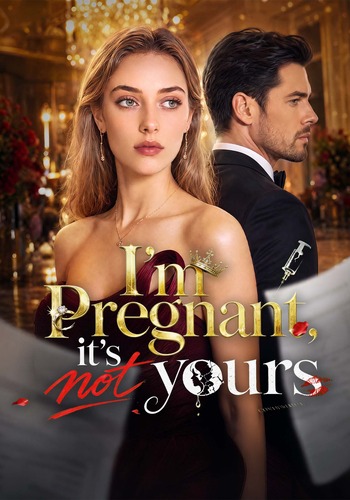
Series Information
- Title: I'm pregnant, it's not yours
- Year: 2026
- Platform: GoodShort
- Genre: Urban
- Format: Vertical short drama released on GoodShort across thirty seven episodes, most running between two and three minutes, filed by the platform under Urban.
Synopsis
Iris has already done the arithmetic on her marriage long before anyone thinks to ask her about it. She lives in a house where affection is rationed, married to a man whose attention keeps sliding toward his secretary, and the reason for that sliding is obvious to everyone except, apparently, him. The other woman carries a resemblance to someone he never finished loving, and he treats that resemblance as a permission slip. What makes the opening stretch work is how little she performs about any of it. She watches, she counts, and she keeps her own news to herself.
Divorce arrives as her decision rather than his, and that single reversal powers everything after it. She asks for it plainly, with no scene and no audience, at the exact moment he assumes every card is in his hand. Then she tells him about the pregnancy, and she tells him the child is not his. The line lands like a door pulled shut instead of a slap, and it takes from him the one thing he had been quietly relying on, which was the certainty that she would still be there whenever he decided to come back.
What is actually at stake here was never the marriage, which is finished before the story properly begins. It is credibility. He needs the version of events in which he was the one who grew tired first, and a wife who walks out carrying someone else's child leaves him no way to tell it. A woman who leaves on her own terms is far more dangerous to the people around her than one who begs, and the middle stretch keeps returning to that idea: whoever controls the story controls the room.
The dynamic between the two leads gets stranger and considerably better once they separate. He starts reconsidering her almost immediately, which is the oldest reflex in this corner of the genre, but the show is patient about it and lets the reconsideration arrive as recognition instead of apology. She has no appetite for being the reward at the finish line of his personal growth. Writing that resists softening a wronged wife into forgiveness the moment her husband begins to suffer is rarer than it should be, and this is one of those cases.
Stories like this one, built for vertical apps, usually solve the woman's problem with money, handing her a wealthy new partner within a few episodes so the audience can enjoy the reversal. This story keeps its attention on composure instead. Iris takes the early rounds through timing and information, not through a sudden windfall, and a protagonist who wins because she knew when to speak is far more satisfying than one who wins a lottery. The five year gap that follows lets the series skip the grinding rebuild entirely and bring her back fully formed.
Thirty seven episodes running between roughly ninety seconds and three and a half minutes each puts the whole thing near the length of a feature film, which is the correct size for a plot like this. GoodShort ends nearly every installment on a turn, and a story built around withheld information fits that rhythm without strain, since each episode can spend exactly one piece of what she knows. The vertical frame does quiet work as well, holding the camera close in a story where the significant events are decisions rather than actions, and a face arriving at a decision is the entire scene. Taken end to end, it moves quickly without feeling hollow, and that balance is harder to reach in this format than the sheer number of titles on these apps would lead you to believe.
Fascinating Curiosities About the Series
- The premise inverts the standard opening of its own genre. Most stories in this lane begin with the wife being discarded, which parks the audience in a position of pity for several episodes. Here she initiates the divorce while holding information her husband does not have, so the first real emotional beat is control instead of humiliation.
- The idealized first love that the husband cannot release is a specific device borrowed from Chinese web fiction, where the figure who outshines every later partner has its own shorthand. Casting the secretary as that woman's lookalike lets the script explain his behaviour completely without ever handing him a line of self justification.
- Spending the paternity reveal at the moment of divorce, rather than saving it for a later episode, is a deliberate structural choice. It tells you the writers wanted the leverage gone early so the series could run on consequences rather than on a secret the audience is waiting to see detonate.
- GoodShort files the series under a single genre, Urban, with no romance label attached. On an app where romance tags drive most of the browsing traffic, that is a positioning decision, and it signals a show being sold on status, money and reputation rather than on courtship.
- The five year time jump saves money as much as it serves the drama. Skipping the rebuild means the production never films the difficult middle years, and the returning version of the character can be established through wardrobe, setting and one or two reaction shots inside a single episode.
- Adding up the per episode durations the platform publishes, the complete run lands near an hour and a half of footage. Writers working at this scale plan the exit of each episode before they plan its middle, because the viewer renews the decision to keep going every two minutes or so rather than every forty.
- No performer is credited anywhere on the series page. GoodShort publishes no cast for this title, which is standard across vertical short drama rather than an omission here, and it means the actors stay effectively anonymous on a production that has already passed a million views.

Diana Foster is an entertainment writer specializing in action-romance hybrids and digital platform storytelling. With a background in genre fiction analysis, she covers the growing intersection of adrenaline-driven plots and romantic arcs in short-form series. Her reviews focus on pacing, production value, and what makes mobile-first content irresistible to global audiences.
Everything on this page was written for information and entertainment. Ownership of I'm pregnant, it's not yours, including copyright, trademarks and all distribution rights tied to the production, belongs entirely to the original creators, the companies that made it and the GoodShort platform. Anyone who wants the complete story should go directly to the official GoodShort service, where the people responsible for the series are credited and paid for their work. This site works purely as a review publication, offering opinion and recommendations to drama viewers. Reading here costs nothing at all. No fee is charged, no card details are requested, and no payment system of any kind sits between a reader and an article. No copyrighted video is hosted, streamed or shared from these pages. The purpose is narrow: helping viewers find dramas worth their time through honest criticism. To watch I'm pregnant, it's not yours in full, and to support the people who built it, open the official GoodShort website or application.