
Pucked by My Hockey Rival - How to Watch for Free
A misread love letter pulls two rival captains together
Advertisements
The plan was matchmaking. The outcome was a feeling Owen never agreed to feel.
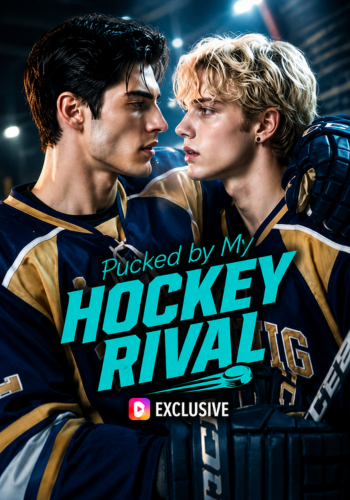
Series Information
- Title: Pucked by My Hockey Rival
- Year: 2026
- Platform: DramaWave
- Genre: LGBTQ+ Romance, Sports Drama, Romantic Comedy, Enemies-to-Lovers, Hockey Romance
- Cast: Main characters Owen (hockey player and team captain) and David (rival team captain), with the central romantic arc developing between the two of them. Specific actor credits were not publicly listed in DramaWave's official series metadata at the time of writing.
- Format: Vertical short drama released on DramaWave in 2026 as part of the platform's LGBTQ+ slate, structured as episodic short-form installments designed for mobile viewing, with full-length compilations distributed across DramaWave's official YouTube channel.
Synopsis
Owen is a hockey player who has built his entire identity around opposition, the kind of athlete whose performance climbs in direct proportion to whoever he is playing against. The opening episodes frame him as a team captain, talented enough to lead but emotionally organized around a single fixed point: his rivalry with David, captain of the opposing squad. That rivalry is not abstract or sportsmanlike. It is intimate in the way that only mutual obsession can be, with every game film studied frame by frame, every practice calibrated against an imagined version of his opponent. Owen does not yet have language for what that level of focus actually means, and the script lets that gap sit there for the audience to notice before the character does.
The trigger arrives in the form of a folded sheet of paper. Owen picks up a love letter, sees a handwriting he immediately recognizes, and clocks the unusual last name written across the top. The letter is from David, and the name on the envelope happens to be shared by Owen's sister. The conclusion lands fast and feels obvious: his rival is making a move on his family, and that is unacceptable. What Owen does next is the choice that drives the entire series. He does not confront David. He does not warn his sister. Instead, he engineers a campaign of forced proximity, throwing the two of them together in social situations he can supervise, telling himself he is protecting his family while inventing reasons to be present at every encounter.
What functions as the real adversary in this story is not David. It is Owen's refusal to read his own behavior. Each manufactured meeting requires Owen to be in the same room as the man he claims to despise, and the show treats that contradiction with patience rather than punishment. A coach-imposed plan, designed to keep both captains off the suspension list after a public on-ice fight, requires the pair to spend mandatory hours together in shared team activities. The external stakes involve season records, league standing and reputations across a tight competitive circuit where word travels fast. The internal stakes are messier. Owen has built a life on a wall, and that wall is starting to develop hairline fractures every time David smiles at something that was never meant to be funny.
Where this central pairing really lands is in the way the script refuses to soften David into a passive love interest. He is sharp, observant and aware of exactly what Owen is doing long before Owen is. There is a quiet running joke across the middle episodes where David lets the scheme work, partly because he is curious where it leads and partly because being around Owen for any reason is its own reward. The chemistry, when it appears, does not arrive through a grand declaration. It arrives through small moments: a hand on a hockey stick, an argument about practice schedules that lasts ten minutes too long, a silence in a locker room that nobody knows how to end. By the time the misunderstanding about the letter cracks open, the audience has already watched the two men fall for each other in increments that nobody on screen has named yet.
Most hockey romances on this platform default to a heterosexual pairing where a family member acts as the connective tissue between rival teams. This script does something more interesting. It makes the rivals themselves the romantic pair and uses the family-member misreading only as the mechanism that gets them into a room together. The structural payoff is significant. Owen is not a bystander to a romance happening near him. He is the architect of the situation that will eventually corner him, which means every comedic beat doubles as a small piece of dramatic irony. The queer romance category in short-form drama has been slowly moving away from suffering as a prerequisite for love, and this entry leans into that shift hard. The misunderstanding is funny first and revelatory second, and the show trusts that the audience can carry both registers at the same time.
DramaWave released the series in 2026 as part of its LGBTQ+ short drama slate, and the choice of format matters as much as the choice of subject. Each episode runs in vertical orientation, calibrated for phone viewing, and ends on a beat designed to feed the next tap without artificially withholding. The hockey setting suits this rhythm. Ice rink scenes are kinetic, close-up reaction shots translate well to a smaller frame, and the locker room exchanges play almost entirely on faces, which is exactly where vertical drama tends to be strongest. For anyone scouting DramaWave's catalogue for queer romance that leads with comedy instead of tragedy and treats its characters as adults capable of being wrong about their own feelings, this is one of the more carefully constructed examples of the year.
Fascinating Curiosities About the Series
- The forced proximity setup in this short drama operates differently from the genre standard. Most LGBTQ+ romances in the format trap their leads with external circumstances like weather, broken vehicles or shared apartments. Here the protagonist himself engineers every meeting, which means the comedy and the dramatic irony are layered into the same scene.
- Owen's misreading of the love letter relies on a specific narrative trick: a rare last name. The writers chose to give David and Owen's sister an unusual shared surname so the assumption would feel plausible to the character without seeming idiotic to the audience. That small detail keeps the entire plot engine running believably across multiple episodes.
- The coach-enforced consequence that locks Owen and David together draws on a familiar disciplinary practice in competitive hockey. Mandatory shared activities are sometimes imposed on opposing players involved in public altercations to defuse rivalry headlines. The script uses this as a credible bridge into forced proximity that would not have worked in a workplace or family setting.
- DramaWave's 2026 LGBTQ+ slate moved deliberately away from the trauma-centered approach that dominated queer short drama in earlier years. This title is one of several recent releases on the platform that lead with humor and self-inflicted misunderstanding rather than family rejection or violence as the source of conflict.
- The hockey setting is not decorative. Ice rinks favor wide reaction shots in vertical format because the players move in straight lines along the boards, which keeps two characters in frame at the same time. The cinematography uses this naturally to keep Owen and David visually linked across nearly every athletic sequence.
- There is a structural detail that rewards close watching during the middle episodes. David shifts from puzzled to deliberately complicit roughly halfway through the season. From that point on, he is no longer fooled by Owen's matchmaking scheme. He is participating in it on his own terms, which means the misunderstanding becomes a shared joke between him and the audience long before Owen catches on.
- Cast information for the production was not publicly disclosed on DramaWave's official metadata pages at the time of the series release. This is unusual for the platform but consistent with several other titles in its 2026 queer slate, where the focus of promotional material has been the premise and the format rather than individual performers.

Diana Foster is an entertainment writer specializing in action-romance hybrids and digital platform storytelling. With a background in genre fiction analysis, she covers the growing intersection of adrenaline-driven plots and romantic arcs in short-form series. Her reviews focus on pacing, production value, and what makes mobile-first content irresistible to global audiences.
This commentary is published purely for informational and entertainment purposes. All intellectual property rights tied to Pucked by My Hockey Rival, including copyrights, trademarks and distribution privileges, belong solely to the original creators, the production teams involved and the DramaWave platform. Anyone interested in watching the complete series is warmly invited to do so through DramaWave's official site or mobile application, where the creative team behind the production receives appropriate recognition and compensation. Our website operates strictly as a critical review hub offering analysis and recommendations for fans of vertical short drama. Every article, review and recommendation published on this site is available at zero cost. We do not charge subscription fees, we never request banking or credit card details, and no payment mechanism of any kind is required to access our writing. We also do not host, stream or redistribute material protected by copyright law. Our purpose is simply to help readers find worthwhile productions through honest, thoughtful criticism. To experience Pucked by My Hockey Rival in full and support the artists responsible for the show, please head directly to DramaWave's official website or app.