
Don't Let The Blind Heiress's Dog Die
Greed, a banquet and a dog worth fighting for
When Liam reaches for a $5B trust, Clara answers with exposure and karma
You will be redirected to another site
Series Information
- Title: Don't Let The Blind Heiress's Dog Die
- Platform: NetShort
- Genre: Underdog Rise, Karma Payback, Karma
- Format: Upright, mobile-first short drama format on NetShort, 40 Episodes in total.
Synopsis
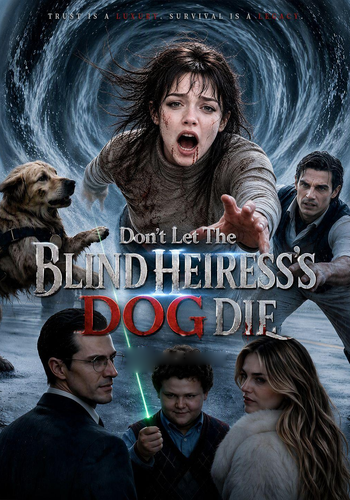
Revenge dramas live or die on their heroine, and Clara is an unusual one. She is wealthy beyond ordinary imagination, the beneficiary of a five-billion-dollar trust, and she is blind. Many stories would treat that combination as fragility. This one treats it as camouflage. Clara is misjudged by the people around her, and the series is at its sharpest when that misjudgment starts working against the very people making it. Her closest companion is Max, a dog who is probably her guide and certainly her most loyal ally, and the bond between them is the softest thing in an otherwise hard-edged plot. That softness matters, because it gives the story something to protect.
The inciting turn is domestic and chilling. Liam, the husband Clara relies on, is revealed to be pursuing her trust. Notice how little the premise needs to dramatize this. No grand villain speech is required; the horror sits in the idea that ordinary kindness can be counterfeit. For an audience, this flips the viewing experience. Earlier warmth becomes suspect, and every new moment with Liam is watched for cracks. That shift in how we see him, more than any single event, is what pulls the series out of melodrama and into suspense. Clara has to reassess a whole marriage, and the audience reassesses it with her, which makes the betrayal feel shared rather than observed.
Greed rarely stops at one target, and the narrative widens fast. Liam's ambitions point toward an IPO, which means Clara's money is fuel for something larger and far more public. Then Mason attacks Max. This is the emotional core of the title, and the storytelling stays restrained, leaving the dog's fate unknown instead of resolving it on the spot. That decision keeps a thread of dread running underneath everything that follows. Viewers who came for corporate scheming suddenly have a much more personal reason to keep watching, and the antagonists have made an enemy of the one person they assumed was harmless.
Character dynamics here play out as a study in loyalty. Liam represents loyalty performed. Max represents loyalty lived, without speech or strategy. Henry stands for loyalty chosen, the support Clara gains once she decides to fight rather than retreat. Putting those three side by side gives the drama a moral clarity that suits the short vertical form, where there is little time for ambiguity. No one gets to hide in a gray zone for long; each character's choices eventually show which kind of loyalty they practice. Clara moves among them like a judge weighing testimony, and the audience weighs alongside her, scene after scene, until the verdict feels unavoidable.
Structurally, the climax borrows its shape from courtroom drama. A lavish banquet becomes the stage, and Clara uses it to expose Liam's lies in front of witnesses he cannot silence. From there the payback promised in the genre tags comes due. Backed by Henry, she wrecks Liam's IPO dream and sends the traitors toward justice. What makes the sequence satisfying is proportion. The punishment matches the crime, and the woman everyone dismissed is the one who hands down the verdict. It is a clean, almost classical resolution for a format that often settles for noise. There is no need for spectacle when the logic is this tidy.
On NetShort the series runs 40 Episodes, each one framed vertically for a phone screen. The format favors close-ups and quick reversals, and this story uses both to keep its secrets tight. It can be started free through NetShort's own app or its website, so there is little reason not to sample the opening episodes and judge Clara's case for yourself. Anyone drawn to karma stories, underdog comebacks or simply the fate of a good dog will find that the hook sets early and holds. Bring patience for the suspense around Max, because the drama makes you earn every answer.
What You Didn't Know About This Series
- Clara's disability is central to the logline rather than a background detail. That positions the series inside a strand of short drama where the heroine's perceived weakness becomes the very thing her enemies fail to account for.
- Only one animal appears among the named characters, and the title is built entirely around him. Giving Max top billing is an unusual marketing decision that can pull in audiences who might skip a standard revenge story.
- The banquet setting reflects a habit of the format. Public gatherings let a single episode deliver a wave of reaction shots, which play well in vertical framing where faces fill most of the screen.
- Liam's ambition is named precisely as an IPO. That detail places him in the world of finance rather than inheritance politics and gives his fall a measurable scale.
- Two of the three genre labels contain the word karma. Tags like these help viewers find stories built on deserved consequences, and this one leans hard into that promise.
- Mason's attack on Max is reported in the official description without a resolution. Leaving it open protects the biggest emotional question in the story and rewards viewers who stay to the end.
- Henry's backing marks a turning point in the balance of power. The description attaches no romance to him, so his support reads purely as the leverage Clara needs against a man chasing a public listing.

Diana Foster is an entertainment writer specializing in action-romance hybrids and digital platform storytelling. With a background in genre fiction analysis, she covers the growing intersection of adrenaline-driven plots and romantic arcs in short-form series. Her reviews focus on pacing, production value, and what makes mobile-first content irresistible to global audiences.
These notes are an independent commentary produced for general information and entertainment. They are not authorized, sponsored or approved by NetShort. Full ownership of Don't Let The Blind Heiress's Dog Die, covering copyright, trademarks and distribution, rests with its original creators and with NetShort. Viewers who want the complete experience should open the official NetShort app or visit its website, where the production receives fair credit and payment. We do not upload, host, stream or share any copyrighted footage. No part of this site requires payment. There are no subscription fees, no card forms and no paywall between you and our writing.