
From Page to King Arthur
From the lowest post in the palace to the edge of a crown
A dragon, a rescue and a teacher named Merlin stand between Arthur and justice
You will be redirected to another site
Series Information
- Title: From Page to King Arthur
- Platform: DramaBox
- Genre: Underdog Rise, Revenge, The Chosen One, Fantasy
- Format: Forty chapters on DramaBox, each one framed vertically for mobile screens.
Synopsis
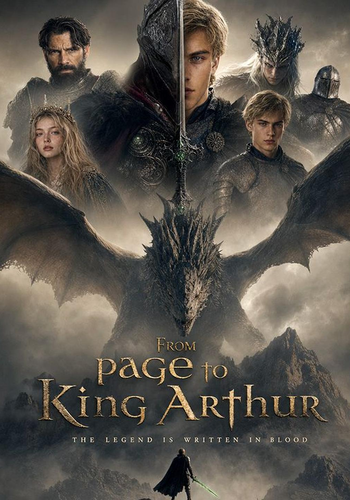
The title is the plot in miniature. A page sits on the bottom rung of court life, a king sits on the top, and the series is about the distance between them. Its hero, Arthur, holds a modest post in Albion's royal armory, where he works without anyone suspecting the truth about his birth. He is the son of King Uther. His ambition is not abstract: he means to avenge his father and reclaim the standing that was stolen from his line. The interest of the character lies in the double life, a servant on the outside and a prince underneath, a tension the premise never lets him escape. Every early scene draws its tension from that split.
Its inciting injury predates the story by two decades. Minister Mordred betrayed and murdered King Uther, an act that split the course of Arthur's life in two. Structurally, the premise places this as backstory rather than spectacle, keeping the focus on what Arthur does now. What he does is train. Under Merlin, and without revealing who he is, Arthur begins shaping himself into someone capable of meeting his father's killer on equal terms. That choice to prepare rather than strike blindly is the hinge of the first act. The time gap also matters dramatically, because twenty years of silence gives every eventual move by Arthur the weight of a long delay.
Mordred functions as a classic central antagonist, the fixed point every subplot bends toward. The tasks between Arthur and him read like a sequence of gates. He has to gain passage to Avalon. He has to draw the sacred sword that kings alone may hold. He has to slay a dragon and endure humiliation along the way. And the final horizon is wider than revenge: the premise promises a hero who will beat Mordred and put humanity on top in its clash with the dragons. In other words, a palace grudge and a contest between humans and dragons are built to resolve through the same man.
The emotional design is economical. Merlin occupies the mentor slot, supplying discipline and a sense that Arthur's suffering has a purpose. Guinevere occupies the slot of the person rescued, and through that rescue the series gives Arthur a chance to act on instinct rather than calculation. One relationship looks back toward the father he lost; the other looks ahead toward the life he could build. Placed between them are the humiliations, which do the slow work of making the audience impatient on Arthur's behalf. That impatience is exactly what a payoff in the final episodes needs. Each relationship, in other words, gives the audience a reason to stay through the hardest stretches.
Viewed against the broader short drama catalog, the most distinctive move here is genre fusion. The format usually builds hidden identity plots in contemporary settings, so relocating that formula into a fantasy world with dragons and a sacred sword gives it a fresh surface. The Arthurian names add a layer of recognition, though the premise appears to use them freely as scaffolding for a revenge arc rather than retelling any particular version of the legend. The tagging captures that blend well, since underdog, revenge, destiny and fantasy each get their own line in the story.
Practical details are straightforward. The series sits on DramaBox with 40 Episodes, produced in the tall vertical frame the platform is known for, and its page shows 90.6K views and 6.8K favorites. It can be watched through the DramaBox app or the DramaBox website, and the opening episodes can be started without charge. The vertical, episodic structure works in this story's favor, because a hero's journey made of discrete trials splits naturally into short units. For viewers who like tracking a long arc from the bottom of the ladder to the top, it rewards close attention.
What You Didn't Know About This Series
- The word page in the title carries a double meaning. In court tradition a page was a young attendant at the bottom of the household, which is where Arthur starts, but the word also hints at turning a page as his story moves forward.
- Forty episodes is a tight budget for a quest that includes a mentor, a dragon, a rescue and a sacred sword. The constraint pushes the plot toward compression, leaving little room for side stories.
- Its DramaBox page lists 90.6K views and 6.8K favorites. Favorites on the platform act as a follow button, so those 6.8K accounts have chosen to keep the series close at hand.
- Uther, the murdered king, is an absent figure who still drives the entire plot. His death two decades earlier is the single event that every later trial traces back to.
- Of the tags attached to the series, Fantasy is the one that changes the rules most. It allows a dragon to serve as a trial and a sword to stand as a test for a king, devices a contemporary revenge drama could not use.
- The hero's training happens in secret, under Merlin, while the palace sees only a servant. That arrangement gives the series a spy story undertone inside its fantasy frame.
- Because the series is vertical, it is designed for one handed viewing on a phone. It can be started free on the DramaBox app or website, which makes sampling the opening episodes easy.

Diana Foster is an entertainment writer specializing in action-romance hybrids and digital platform storytelling. With a background in genre fiction analysis, she covers the growing intersection of adrenaline-driven plots and romantic arcs in short-form series. Her reviews focus on pacing, production value, and what makes mobile-first content irresistible to global audiences.
What you are reading is an independent critique, produced without any link to DramaBox. The platform has not reviewed, sponsored or approved this text. Copyright, trademarks and all other rights in From Page to King Arthur remain with its creators and with DramaBox. For the full series, the official DramaBox app or site is the right destination, since it is the channel that compensates the people behind the production. This website does not host, stream or distribute video. Access is free in every sense: no subscription fee, no credit card form and no paywall of any kind.