
Horror Game: She's a Monster, I See a Hottie
Gothic horror meets courtship in a vertical frame
One man, one terrifying bride and a system that rewards affection instead of escape
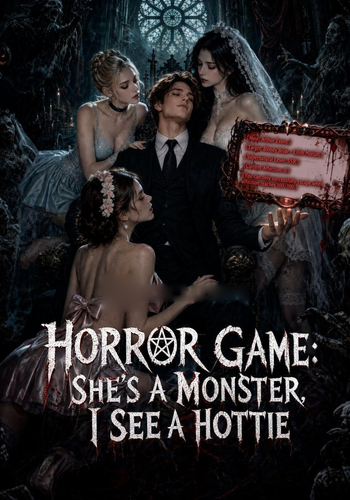
You will be redirected to another site
Series Information
- Title: Horror Game: She's a Monster, I See a Hottie
- Platform: NetShort
- Genre: Horror, Life OL, Dark
- Format: Mobile vertical production with 51 episodes, distributed through NetShort
Synopsis
Consider the protagonist first. Arthur enters the story without a long backstory, and the official logline is content to define him through his circumstances. He is a prisoner of a wedding at Ravenhurst Manor that runs on the logic of a lethal game. From a writing standpoint this is efficient characterization. A man with nothing but a will to live is easy to read and easy to follow, and the specifics of his personality can surface through his choices under pressure rather than through exposition. In a format that rewards speed, that economy is smart. We learn who Arthur is by watching what he is willing to say to a creature that could end him.
Next comes the inciting device. Arthur finds himself tethered to the Romance Escape System, and its condition for release reshapes the genre around him. He must win the heart of Lilith, the Bloody Bride. Survival horror usually measures a hero by how well he hides, runs or fights. This premise measures him by how well he courts. That inversion gives the screenwriters a rich playground. A trembling compliment, a carefully chosen gesture or a single steady look can carry the suspense that a chase scene would carry elsewhere, and the camera can stay on faces instead of footsteps.
Antagonism in this setup operates on three levels. Lilith is the visible menace, framed by name and reputation as the thing to fear. The system is the invisible one, an impartial rule maker that cannot be charmed or reasoned with. And the manor holds the deepest threat of all, a secret the official text places about a century in the past, hidden under the bride's stained veil. Layering danger this way is a classic gothic technique. The present night is frightening, but the real dread lives in what the house remembers and what Arthur has not yet learned. Each layer can be peeled back at its own pace, which suits a long run of short episodes.
Character chemistry is where the title's wit becomes drama. Onlookers see a monster in Lilith, while Arthur sees a beauty, and that split in perception is the central image of the series. Dramatically, it raises questions of reliability. Is Arthur's view sincere, strategic or a symptom of the game bending his mind? Each possibility colors their scenes differently. Since the relationship begins as a requirement rather than a choice, every soft moment between them carries a shadow of doubt, and that doubt is a better engine for tension than any jump scare could be.
Tonally, the project attempts something many short dramas avoid. It pairs the visual vocabulary of gothic horror, a looming manor and a stained bridal veil, with the timing of romantic comedy. The official genres, Horror, Life OL, Dark, lean grim, but the title practically winks at the viewer. Balancing those registers is difficult, and the payoff when it works is a series that can unsettle and amuse in the same breath. I value that ambition. It refuses to soften its monster into a harmless love interest, and it refuses to let the horror swallow the humor. Few titles in the vertical format even try to hold both registers at once.
On the production side, the series consists of 51 episodes made for NetShort in vertical format. The tall frame is not a limitation here so much as a tool. It can isolate a single figure in a corridor, crowd the edges of the screen with darkness and let a close-up of a veil dominate the image. Short episodes also favor a structure of escalating rounds, a natural fit for a game premise. Viewers can begin for free through the official NetShort app or website, which makes it simple to judge the opening chapters on their own terms before committing to the rest.
What You Didn't Know About This Series
- The title is structured like a setup and a punchline. Its first clause states the horror premise, and its second flips it into comedy, so the tone of the series is announced before any footage plays.
- Gothic fiction has long treated the bride as an uncanny figure. By naming its central presence the Bloody Bride, the series plugs directly into that tradition rather than inventing a brand new monster.
- Ravenhurst Manor is the one setting singled out in the official synopsis. Single location horror concentrates atmosphere and makes the building itself feel like a character.
- Courtship replaces combat as the core survival skill. Under the Romance Escape System, the suspense comes from conversation and reaction, which suits the close framing of vertical video.
- Just two names appear in the official logline. A cast pared down that far on paper signals that the central duo will carry most of the dramatic weight.
- Lilith's secret is dated roughly a century back. Anchoring the mystery so far in the past gives the story a second timeline to uncover, even while the main action stays in the present.
- Horror, Life OL, Dark is the genre lineup NetShort assigns. The absence of a romance or comedy tag shows how the platform frames the title first as a dark story, despite its playful name.

Diana Foster is an entertainment writer specializing in action-romance hybrids and digital platform storytelling. With a background in genre fiction analysis, she covers the growing intersection of adrenaline-driven plots and romantic arcs in short-form series. Her reviews focus on pacing, production value, and what makes mobile-first content irresistible to global audiences.
Readers should know that this publication is independent. It is not owned by, affiliated with or approved by NetShort, and its reviews reflect editorial opinion offered for informational and entertainment purposes. Intellectual property in Horror Game: She's a Monster, I See a Hottie, including copyright, trademark and distribution rights, rests with the original creators and with NetShort. For the full experience, watch the series on NetShort's official website or mobile app, where creators are credited and compensated. We neither host nor stream nor distribute copyrighted video. Access to our writing is free in every case: no subscription fees, no credit card forms and no paywall of any sort.