
Sister Stole My Guy, I Got the Emperor - How to Watch for Free
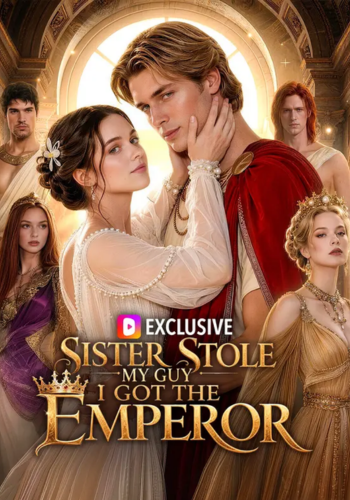
At the garland ceremony, Chloe grabbed Julia's chosen suitor
Advertisements
So Julia jokingly picked a ragged beggar, never guessing he ruled Rome
Series Information
- Title: Sister Stole My Guy, I Got the Emperor
- Year: 2026
- Platform: DramaWave
- Genre: Historical Romance, Roman Empire, Hidden Identity, Identity Reveal, Marriage Swap, All-Too-Late, Sister Rivalry, Beggar to Emperor, Costume Drama, Revenge Romance
- Format: DramaWave vertical short drama released with English audio and subtitles across a serialized run of roughly thirty-six episodes, set in a golden-age Roman Empire and built around a marriage-selection ceremony that goes spectacularly off script.
Synopsis
A merchant's daughter walks into a ceremony meant to secure her future and walks out bound to the most powerful man in the world, entirely by accident. That woman is Julia, and the setting is the golden age of the Roman Empire, where her father stages a grand garland ceremony to choose husbands for his two daughters. The ritual is supposed to be orderly and predictable, a public matching of wealth and status, but the opening episodes make clear that Julia's fate is about to swerve in a direction no one at the ceremony could have scripted.
The swerve begins with betrayal at the hands of her own sister. Chloe snatches the suitor Julia had chosen, humiliating her in front of the assembled guests and leaving her without the match she expected. Rather than dissolve into public shame, Julia makes a defiant, almost flippant choice, placing her garland on a ragged beggar standing at the edge of the ceremony, a gesture that reads as either surrender or spite to everyone watching. The crowd laughs, Chloe gloats, and Julia appears to have thrown her future away on a man with nothing.
Appearances, in this story, are the entire trap. The beggar Julia chose in a moment of wounded pride is no vagrant at all but the Emperor himself, moving through his own empire in disguise for reasons the early episodes reveal in fragments. Chloe and the stolen suitor believe they have won, unaware that the sister they mocked has bound herself to the single most powerful figure in Rome. What is truly at stake becomes the slow, delicious unraveling of that misunderstanding, since every insult aimed at Julia's supposed beggar husband is an insult aimed, unknowingly, at the throne.
What gives the show its charge is the gap between what the household believes and what the audience knows. Julia herself does not immediately grasp the full truth of who she married, which lets the writing build the reveal across multiple stages rather than spending it all at once. The relationship between Julia and the disguised Emperor grows out of genuine circumstance rather than calculation, since she chose him when she believed he had nothing to offer, a foundation that makes his eventual regard for her feel earned. Chloe, meanwhile, marches toward the all-too-late recognition that she stole the lesser prize.
Inside the historical-romance corner of vertical drama, this title fuses several dependable structures, the marriage-selection swap, the disguised-ruler reversal, and the sister rivalry that ends in complete role inversion. The Roman Empire setting separates it from the more common ancient-Chinese-court and European-royal backdrops the genre relies on, giving the production a distinctive visual identity of togas, garlands, and imperial grandeur. The disguised-Emperor premise raises the stakes above an ordinary noble romance, since Julia's accidental husband commands an entire empire rather than a single estate.
DramaWave has expanded its catalog of costume and historical romance through 2026, targeting viewers who enjoy the satisfaction of a wronged heroine who unknowingly lands far above her tormentors, and this title fits that direction with confidence. The serialized run of roughly thirty-six episodes gives the writers room to develop the ceremony, the betrayal, the disguise, and the Emperor's reveal as distinct arcs rather than a single compressed twist. The platform distributes the series through its app and shareable clips, part of a broader strategy of building word-of-mouth through high-impact scenes before viewers commit to the full story. By the time the beggar reveals himself as the Emperor, the show has already made Chloe's theft look like the worst bargain she ever struck.
Fascinating Curiosities About the Series
- The Roman Empire setting is a genuine rarity in vertical short drama, a format dominated by ancient-Chinese courts, contemporary cities, and European-style royalty. Building a marriage-swap romance around a golden-age Roman garland ceremony gives the production a distinctive visual identity that stands out in a crowded catalog. The choice signals DramaWave experimenting with historical backdrops beyond the genre's usual settings.
- The garland ceremony that opens the story adapts a real motif from antiquity, where garlands and wreaths carried ceremonial and symbolic weight in Roman and Greek social rituals. Using a public matching ceremony as the inciting event compresses the entire class-and-marriage conflict into a single dramatic set piece. The device gives the betrayal a visible, communal stage that private scheming could not provide.
- The disguised-Emperor premise belongs to a long tradition of ruler-in-disguise stories that span cultures, from folktales of kings walking among commoners to countless costume dramas. The trope works because it lets the audience savor dramatic irony, watching characters mistreat a beggar who holds absolute power. Julia choosing him precisely because he appeared to have nothing gives their bond a foundation of sincerity.
- The sister-rivalry structure, with Chloe stealing Julia's intended suitor, sets up the role reversal that the entire story is built to deliver. Marriage-swap narratives depend on the audience knowing early that the wrong sister claimed the wrong prize. The all-too-late recognition that follows, as Chloe realizes she stole the lesser match, is one of the genre's most reliable sources of satisfaction.
- Some marketing materials for the production reference the Emperor as Augustus, invoking the name of Rome's first emperor and the figure whose reign is most associated with the empire's golden age. Whether used as a literal character name or an evocative shorthand, the reference anchors the fantasy in the most recognizable era of Roman power. The detail helps English-speaking audiences place the setting instantly.
- The heroine's defiant choice of the beggar, made in a moment of wounded pride rather than calculation, distinguishes her from the passive victims common in the swap subgenre. Julia's flippant gesture reads as spirited rather than helpless, which makes her accidental fortune feel like a reward for boldness. That characterization keeps the audience rooting for her from the opening ceremony.
- DramaWave distributes the series with English audio and subtitles and promotes it heavily through clip-based marketing across social platforms, with individual scenes circulating widely before viewers seek out the full story. This sharing-first model is standard for the platform, which builds word-of-mouth through short, high-impact moments. The accidental-emperor reveal is exactly the kind of hook designed to travel well as a standalone clip.

Diana Foster is an entertainment writer specializing in action-romance hybrids and digital platform storytelling. With a background in genre fiction analysis, she covers the growing intersection of adrenaline-driven plots and romantic arcs in short-form series. Her reviews focus on pacing, production value, and what makes mobile-first content irresistible to global audiences.
This page operates as independent editorial coverage, commentary, and recommendation written for readers who follow vertical drama. The complete bundle of legal rights connected to Sister Stole My Guy, I Got the Emperor, including authorship, registered trademarks, and worldwide distribution licensing, belongs exclusively to the original creative team, the production studio, and the DramaWave platform. Anyone who wants to watch the full series should head directly to DramaWave's official application or its official website, since that route is the only legitimate channel through which the cast, the writers, and the production crew receive the recognition and the financial return their effort merits. The function of this site is restricted to publishing editorial reviews, recommendations, and analytical commentary directed at audiences who follow the vertical drama format. Every article and review posted on this site can be read entirely without cost. Our pages never operate paid subscriptions, never request banking or credit card information from visitors, and never lock any portion of our editorial behind a paywall of any kind. Mirroring, redistributing, or republishing protected material is conduct this site refuses to engage in under any condition. Our purpose is restricted to guiding drama audiences toward titles deserving of their attention through honest editorial work. To watch Sister Stole My Guy, I Got the Emperor in full and to back the creative team behind it, please open the official DramaWave site or its mobile application.